

Imagine turning on lights, typing messages, or even flying a drone — just by thinking. Sounds like science fiction, right? Welcome to the real-world science of Brain-Computer Interfaces (BCIs) — a revolutionary technology that connects the human brain directly to digital systems. In this blog, we’ll explore what BCIs are, how they work, and why they’re shaping the future of how humans and machines interact.
🧩 What Are Brain-Computer Interfaces?
Brain-Computer Interfaces (BCIs) are systems that create a direct communication pathway between the brain and an external device — such as a computer, robotic limb, or smartphone. They read brain signals (electrical activity), interpret them, and convert them into commands that control digital devices.
⚙️ How Do BCIs Work?
- Signal Detection:
Electrodes or sensors placed on (or in) the brain detect neural activity. - Signal Processing:
Software filters and analyzes brain signals in real time. - Command Execution:
The processed signals are translated into digital instructions — for example, moving a cursor or controlling a wheelchair.
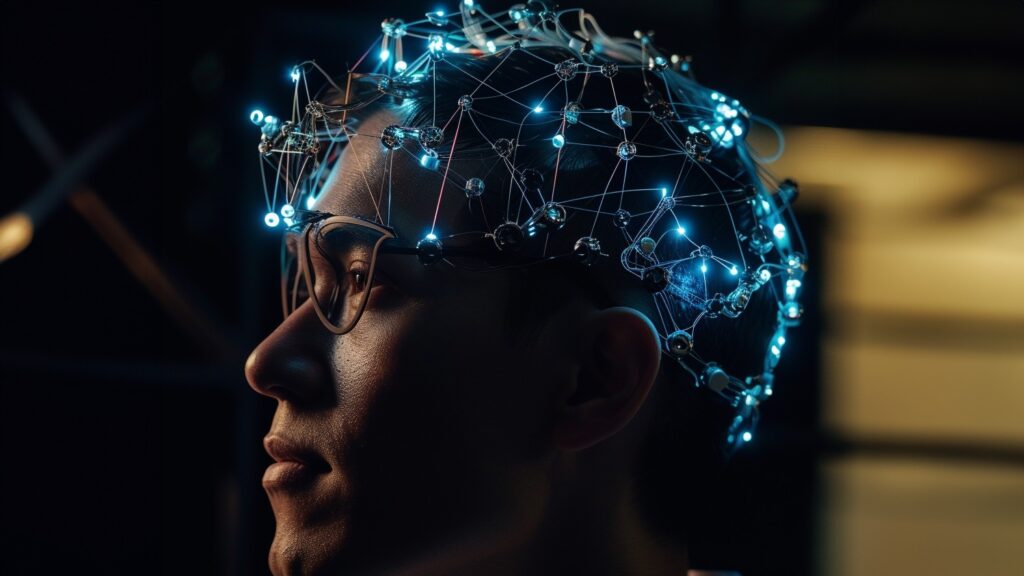
There are non-invasive BCIs (like EEG headsets) and invasive BCIs (implanted directly into the brain).
🧠 Applications of BCIs
👩⚕️ 1. Medical & Accessibility
- Help people with paralysis control prosthetic limbs or speak using thought.
- Restore vision and movement in patients with neurological disorders.
- Early detection of seizures or cognitive decline.
🕹️ 2. Gaming & Entertainment
- Mind-controlled video games.
- Enhanced immersive experiences using thought-based controls.
🧪 3. Scientific Research
- Studying how the brain works in real-time.
- Mapping brain responses to emotions, pain, or attention.
💼 4. Workplace & Productivity
- Neural typing or communication for those unable to use traditional tools.
- Mental workload monitoring for high-risk jobs like pilots or surgeons.
🧬 BCIs and Artificial Intelligence
AI plays a crucial role in BCI development:
- Machine learning algorithms analyze complex brain signals.
- AI helps adapt the interface to individual users, improving accuracy over time.
- Together, AI + BCI is enabling adaptive, personalized mind-machine control.
🚧 Challenges Ahead
Despite exciting progress, BCIs face obstacles:
- Signal clarity: Brain activity is noisy and varies per person.
- Ethical concerns: Privacy of thoughts, cognitive overload, data misuse.
- Cost & accessibility: Current systems are expensive and experimental.
- Invasive risks: Surgical implants carry medical risks.
🔮 The Future of Thought-Controlled Tech
Tech giants like Neuralink, Meta, and OpenBCI are already investing in this space. In the next 10–20 years, we may see:
- Seamless mind-to-device communication.
- Brain texting or hands-free remote work.
- Cognitive augmentation: enhancing memory or attention via digital systems.
🧠 Final Thought
Brain-Computer Interfaces are not just about convenience — they represent a paradigm shift in how we interact with technology. As science unlocks the brain’s secrets, the boundary between human thought and digital control is beginning to disappear. In the future, we might not just use technology — we’ll become part of it.

