
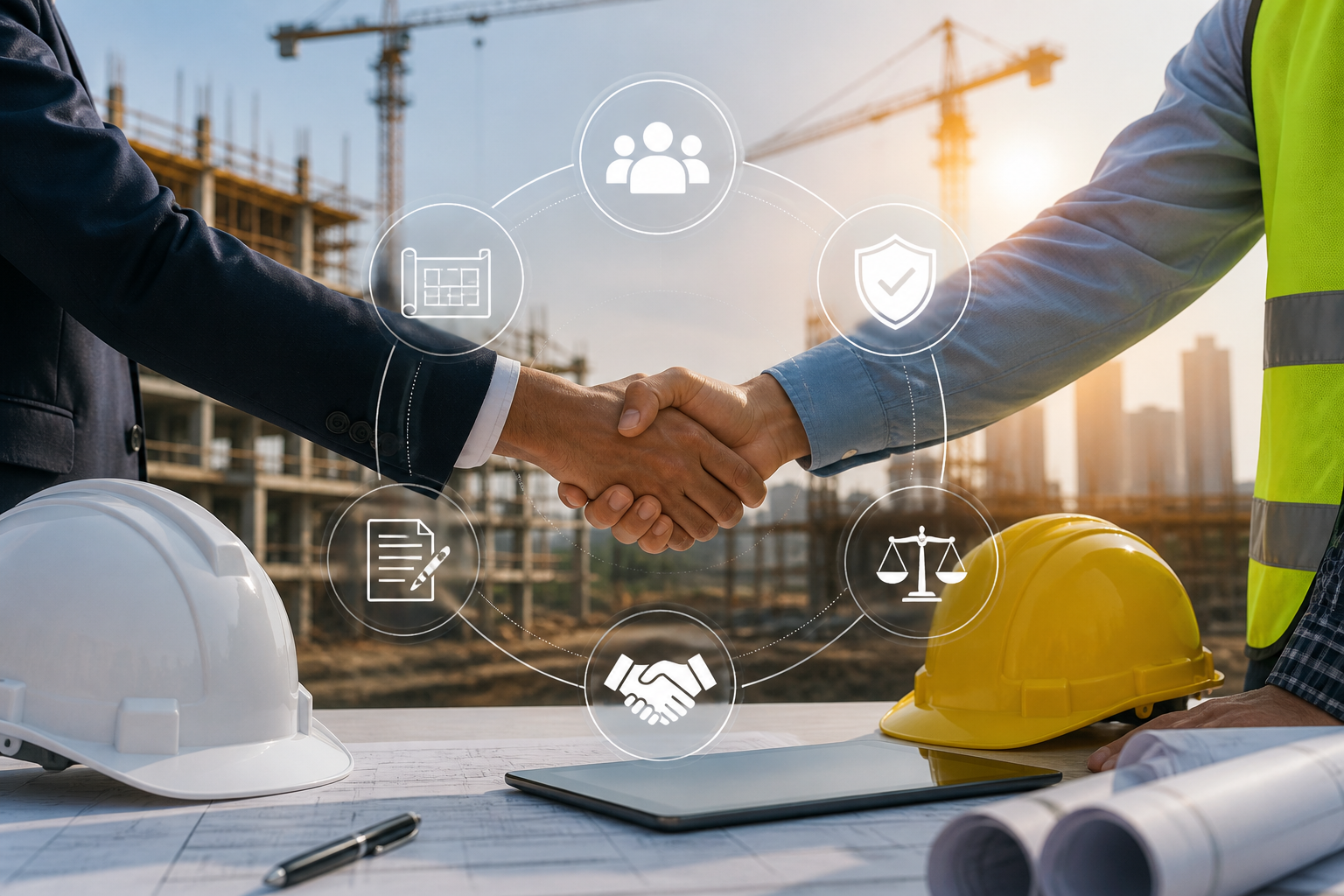
Construction dispute avoidance has become a top priority for project owners, consultants, contractors, and developers who are dealing with the complex infrastructure environment of today. Large construction programs now often involve a number of different stakeholders, multilayered procurement systems, global supply chains, and tight delivery schedules, all of which make conflicts more likely. Industry research by bodies such as the Project Management Institute (PMI) and the Royal Institution of Chartered Surveyors (RICS) regularly indicates that among the main reasons for project disputes are poor communication, decision-making in silos, and a lack of clear accountability.
Meanwhile, collaborative contracting models and proactive stakeholder engagement strategies have been successful to a great extent in the reduction of claims, delays, and cost overruns. Organisations that focus on transparency, risk re-assessment, and the setup of the project governance framework consistently outperform their peers in delivery certainty and client satisfaction. As capital projects get more and more advanced, the fact that collaboration is a very good practice from a cultural standpoint and can also serve as a strategic framework for long-term commercial success is becoming clear to many organisations.
Why Collaboration Is the Foundation of Construction Dispute Avoidance
Construction has always been an industry of working in isolation. Owners, consultants, contractors, subcontractors, and suppliers concentrate on fulfilling their individual contractual obligations, which makes their collaboration suffer. Such a disjointed approach is so common that it leads to a mismatch of expectations, decisions made on the spot, and conflicts between the parties, which end up in formal claims. By enabling transparency, accountability, and group problem-solving during the whole lifespan of a project, collaboration becomes a tool for construction dispute avoidance.
Dispute management systems advocated by PMI recognise communication systems that link all parties and early stakeholders’ involvement as key factors in the reduction of litigation and arbitration cases. In the same vein, RICS procurement strategy guidance states that collaborative procurement models lead to a better balance between commercial objectives and project execution. Companies that focus on directed communication, join these mechanisms to work, and risk monitoring on a real-time basis can quite easily hit the targets and at the same time keep disputes to a minimum.
Key Drivers Behind Construction Disputes and How Collaboration Solves Them
Disagreements can arise even between highly experienced project teams if the communication system fails or if the project risks are not collectively managed. Therefore, discovering the fundamental reasons for a conflict is a must in order to develop efficient prevention approaches.
1. Ineffective Communication and Lack of Relevant Information
Among the numerous difficulties encountered by the construction industry, one of the top culprits for conflicts is the lack of harmonious communication among different stakeholders. If project teams are working without a central reporting system, it is very likely that misunderstandings will lead to great things like timeline scope approvals, and responsibilities will be handled instantly. Also, if consultants show delayed reactions and the owner gives unclear instructions, this situation can lead to costly rework and disrupted schedules.
For the construction dispute avoidance, structured communication channels must be established and maintained through regular coordination meetings and documented decision-making processes. Besides that, digital collaboration platforms, shared dashboards, and integrated reporting tools are effective ways to lessen the level of uncertainty and, at the same time, raise the transparency of the different teams.
2. Lack of Proper Risk Distribution in Contracts
Disagreements often trace back to contracts that are not only badly drafted but also contain the unfair or unclear distribution of risks among the different project parties. At times, contractors are forced to take on risks over which they have no control, and owners tend to be unaware of the consequences of incomplete project definitions at the time of procurement.
As per RICS procurement strategy principles, risk distribution should be a win-win situation for the parties involved, so that this leads to cooperation instead of antagonisms during contract administration. Collaborative contracts, e.g. NEC integrated project delivery models, and alliance agreements encourage shared responsibility rather than one being defensive in project management. Such ways of working will lead to more robust main stakeholder relationships as well as greater resilience of the project in the long run.
3. Unscheduled Modifications & Uncertain Project Goals
It is quite normal for construction projects to change and redefine themselves after the start has been made, especially in the case of complex infrastructure and commercial projects. In the absence of well-defined change management systems, changes in scope can lead to disputes over extra costs, delays, or different technical interpretations. Helping each other out through cooperation keeps stakeholder communication open and the discussions proceeding so that a decision on implementation can be properly made.
The best practices in construction claims management require professionals to rely on clear records, quick authorisations, and collaborative evaluations of effects. Being on the same page from the start about the project objectives also greatly contributes to reducing the risk of the expectations stepping on each other later on in the project lifecycle.
4. Delayed Decision-Making by Stakeholders
Approvals that come slowly and delays from the project stakeholders’ side are the main causes of schedule overruns and creation of contractor claims. In many projects, decision bottlenecks arise because governance structures are not clear about authority and accountability.
Collaborative governance models establish quicker escalation procedures and also enhance cross-functional coordination among owners, consultants, and contractors. Organisations that implement project collaboration strategies in a structured way frequently have a better handle on their schedules and fewer disputes. Holding regular executive alignment meetings further helps to make strategic decisions so that the issues do not escalate into contractual conflicts.
5. Lack of Trust Between Project Participants
Trust is one of the greatest ignored contributors to project performance in the construction industry. If stakeholders see contracts only as legal protection tools and not as operational frameworks, then the relationships become defensive and transactional. In such an environment, innovative, proactive communication and joint problem-solving are discouraged.
Construction dispute avoidance at its best is the result of trust that has been built on transparency, fairness and regular stakeholder engagement. Leadership cultures that are collaborative motivate teams to identify risks at the earliest stage instead of hiding the issues until they turn into formal disputes.
The Business Impact of Construction Disputes
Construction conflicts are not just issues between law and contracts. They also cause huge operational, financial, and reputational damages to the whole project environment. The immediate expense of arbitration, court disputes, and expert advice can rapidly add up to a few million dollars in the case of large-scale infrastructure projects. But usually, the indirect effects turn out to be more harmful since they lower productivity, weaken confidence among stakeholders, and spoil long-term business relations.
The following table highlights the broader impact of disputes on construction projects:
| Impact Area | Typical Consequence | Long-Term Business Effect |
| Schedule Delays | Extension of project timelines | Reduced client confidence |
| Cost Overruns | Increased labour and material expenses | Lower profitability |
| Productivity Loss | Reduced workforce efficiency | Operational disruption |
| Relationship Damage | Breakdown in stakeholder trust | Future collaboration risks |
| Reputation Impact | Negative market perception | Reduced bidding opportunities |
| Legal Expenses | Arbitration and litigation costs | Financial strain |
Firms emphasising proactive construction dispute avoidance stand on the idea that handling issues before they arise is a lot cheaper than fixing them later. According to PMI research, working together early cuts down not only the chances of conflicts but also raises the level of project predictability. Besides, organisations with well-developed collaboration platforms commonly see better customer retention rates and have a more durable commercial partnership network.
Collaborative Procurement Models That Reduce Disputes
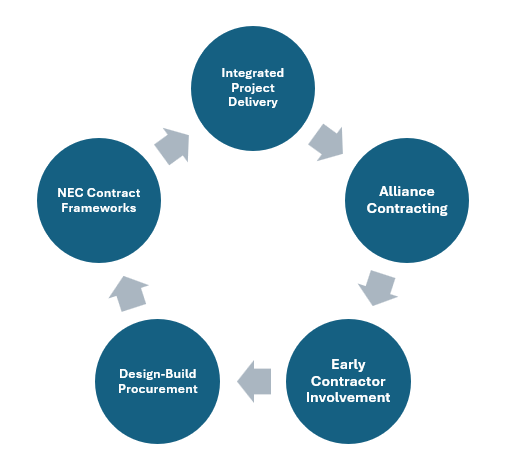
Modern procurement strategies are primarily focused on collaboration rather than adversarial contracting. Leading players in the sector are moving away from inflexible transactional models to integrated delivery frameworks, which put shared outcomes first.
1. Integrated Project Delivery (IPD)
Integrated Project Delivery (IPD) gathers owners, designers, contractors, and key suppliers into a single commercial agreement. Instead of each protecting their own separate interests, the participants in the project aim jointly for the success of the project.
Sharing risks and rewards motivates them to find solutions to problems early, therefore avoiding the escalation of disputes. Construction dispute avoidance becomes very effective because all parties are working on the problems together. Moreover, IPD methods bring about more innovation by involving the contractor very early in the design phase.
2. NEC Contract Frameworks
The NEC contract system is well known for encouraging cooperative project management styles. These contracts require openness, giving early warnings, and ongoing conversations among parties. Instead of just using legal means for enforcement, the NEC system is based on resolving issues through discussion and negotiation during the project delivery.
Many companies implementing NEC have seen an increase in the prevention of construction claims and quicker dispute resolutions. Emphasis on early intervention drastically reduces antagonistic behaviours.
3. Alliance Contracting
Alliance contracting is an excellent choice, especially for the big infrastructure and public sector projects that are characterised by a lot of uncertainty and technical complexity. With this type of contracting, the parties involved not only share the risks of the project but also the rewards through the establishment of joint governance bodies. This shared governance enhances a collaborative atmosphere by, among other things, raising the level of trust, allowing faster making of decisions, and deepening the understanding of the project among the team members.
When construction disputes occur, the best construction dis[ute avoidance methods should be chosen, especially in alliance situations, and these are mainly based on openness and the willingness to take responsibility collectively. Besides, in such situations, going after one another with aggressive claims is the last thing on the minds of the parties involved.
4. Design-Build Procurement
Design-bid-build projects are the norm in the construction industry. Sometimes, because of the disjointedness that exists between design consultants and construction teams in such models, conflicts are bound to happen. When design and construction are brought together in one contract, as is the case with design-build procurement, the chances of design and construction teams misunderstanding each other, the errors and rework resulting from these, and the conflicts related to interpretations become minimal.
Apart from those who choose design-build because of the communication benefits, quite a good number of them report experiencing construction conflict resolution issues to a much lesser extent. Communication throughout the project is also a lot faster, which is a huge contributing factor to better schedule performance.
5. Early Contractor Involvement (ECI)
The idea behind Early Contractor Involvement is that the contractors get involved at the conceptual planning and design phases so that their views are taken into account at that time, and not that they only come aboard after everything has been decided. This is the main benefit of getting contractors to work together with the planners and designers at the very early stages. Their point of view gets to be considered before the construction risks get baked into the working plan.
Based on their experience and knowledge, contractors can highlight possible issues with the methods of construction, risks related to procurement, and the constraints of scheduling at a much earlier stage in the project. Stronger collaboration during preconstruction significantly improves construction dispute avoidance outcomes. ECI also supports more accurate budgeting and risk forecasting.
Building a Collaborative Culture Across Construction Teams
Contracts and technology platforms alone don’t lead to collaboration. Truly aligned projects are those where a cultural shift leads to openness, accountability and a sense of shared responsibility among all stakeholders.
1. Set Up Proper Communication Channels
Structured communication procedures should be outlined in every construction project planning phase. Teams should be briefed on whom to report to, escalation routes, approval processes and schedules for meetings. Making communication uniform goes a long way towards minimising confusion while enhancing working efficiency.
Good project management in construction calls for well-defined and documented interactions among stakeholders. Digital project management tools make the process even better by having all the project-related information kept in one place.
2. Promote Shared Risk Seminars
Collaborative risk seminars gather the project owner, consultants, contractor, and suppliers to co-discover the uncertainties of the project. During these seminars, parties are invited to freely express their views, which include technical, commercial, and operational risks.
Having a mutual understanding of risks leads to better handling of defence mechanisms and fewer conflicts during the project life cycle. A lot of companies that have figured out how to handle the construction claims management aspects of their business use the workshops as one of their tools. Plus, it helps in contingency planning with early risk recognition.
3. Use Data-Driven Decision Making
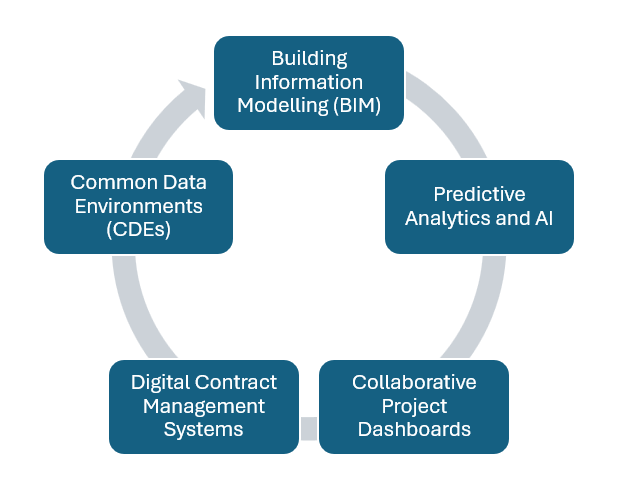
These days, construction projects create tons of operational data that can help teams collaborate better and increase project visibility. Teams get to see the progress through real-time dashboards and Building Information Modelling (BIM), while they can use predictive analytics to spot the risks that are about to occur.
Collaboration based on data leads to a lesser need for assumptions or disjointed reporting systems. More and more construction dispute avoidance organisations are rolling out digital transformation initiatives to enhance transparency and accountability. When you can see more, you can resolve problems before they get turned into formal disputes.
4. Create Shared Performance Metrics
It is quite common that project members have different priorities, which may cause disagreements during the implementation of the project. Shared performance indicators help to unify the focus of teams towards common project results, such as safety, quality, schedule, and client satisfaction.
When stakeholders have the same targets to hit, there is a marked improvement in collaboration. Good construction project management systems make use of both the commercial and operational performance indicators as a part of their governance framework. This kind of coordination not only improves accountability but also makes adversarial behaviours less likely.
5. Invest in Leadership Alignment
Senior leadership is very influential in creating a culture of collaboration within projects. Project teams tend to mimic the behaviours of executives when these executives show qualities such as transparency, fairness, and being very responsive. Another benefit of leadership alignment is that it facilitates decision-making, and it also reduces internal conflicts between different stakeholder organisations.
Strong executive sponsorship is the foundation of construction dispute avoidance initiatives that lead to success. For the most part, organisations that have collaborative leadership cultures are the ones that experience the best results in projects and also the highest level of stakeholder trust.
The Role of Technology in Construction Dispute Avoidance
Technological advances are a great catalyst that is transforming the way construction stakeholders communicate, manage risks, and resolve project challenges. Digital tools have become a big part of how the construction industry improves collaboration and reduces disputes on very complex projects.
1. Building Information Modelling (BIM)
BIM platforms are shared digital environments that allow stakeholders to coordinate design, construction sequencing, and operational planning collaboratively. Giving a continuous time updating of project information, BIM facilitates the surfacing of potential clashes and constructability issues.
Having gone through the full project lifecycle, BIM is evidenced to deliver high documentation quality and limited ambiguity during implementation. Thus, an effective construction dispute avoidance strategy that relies on BIM helps improve the alignment between design and construction teams.
2. Common Data Environments (CDEs)
A Common Data Environment acts as a central repository where project documentation, approvals drawings, and communication records are all stored in one platform that can be accessed by everyone. This sort of openness is a great way to ensure that the only conflicting information or outdated documentation is eradicated during execution.
Understanding the fact that CDEs also increase accountability by making decisions that are well recorded and can be traced, the adoption of strong construction collaboration tools has led to fewer disputes and quicker issue resolution in the organisations.
3. Predictive Analytics and AI
Artificial intelligence and predictive analytics enable project teams to pinpoint risk patterns before the issues escalate into major operational problems. They use a variety of data sources, such as historical records, schedule performance, procurement delays, and workforce productivity, to make forecasts of probable disputes.
Having an early view gives the team a chance for proactive intervention rather than a reactive one. Some visionary organisations are making predictive systems a part of their overall construction risk management frameworks.
4. Digital Contract Management Systems
Managing contracts manually usually leads to waits, a lack of uniformity, and documentation gaps that result in disputes. Digital contract management systems make the entire lines of communication faster, change tracking, and keeping a centralised record throughout the life of a project can be done with ease.
Having a better snapshot of contractual obligations helps to cut down on misunderstandings and build a culture of accountability. In fact, construction claims prevention is getting more and more reliant on a well-functioning system for documenting that is both accurate and accessible.
5. Collaborative Project Dashboards
These dashboards give people a chance to see the state of the project in real-time. Indicators of the project’s health, such as schedule performance, safety records, budget variations, and procurement risks, can all be shown on a single dashboard.
This common understanding not only facilitates quicker decision-making but also leads to more teamwork when solving problems. Anyhow, a lot of companies implement dashboards as a basic part of their construction dispute avoidance programs since they help to manage projects in a proactive way.
Best Practices for Owners, Consultants, and Contractors
Different stakeholders in a project have distinct roles in sustaining collaborative work environments. Still, effective dispute prevention relies on the collective coordinated efforts of the whole project community.
1. Best Practices for Project Owners
Owners of projects need to emphasise clarity during the procurement and also set realistic delivery time expectations right from the beginning. Uncertainties can be largely decreased through open scope definition, equitable contract arrangements, and prompt decision-making. Another significant part of the role of owners is to create project cultures based on collaboration by, for instance, leading openness and responsibility. Leadership at the ownership level sets the starting point for successful construction dispute avoidance.
2. Best Practices for Consultants
Consultants are expected to offer prompt advice, keep precise records, and serve as the intermediary in coordinating among stakeholders. Lack of clarity in design details or a delay in responding can pave the way to operational conflicts in the execution phase. Therefore, apart from collaborative workshops and issue resolution, consultants should also facilitate these.
3. Best Practices for Contractors
Contractors need to have open reporting systems and communicate newly identified risks at the early stages rather than waiting for the time of formal claims. Contractors who work in collaboration not only manage contracts defensively, but they also develop problem-solving and relationship management skills. Besides communication with the workforce, investing in digital project control is another way to raise alignment. Those who do well as contractors realise that construction dispute avoidance is both a direct way to make a profit and a step towards building strong client relationships in the long run.
Practical Framework for Collaborative Construction Governance
One of the key ways organisations can foster better project collaboration is by devising a well-ordered governance system that supports all parties in working towards common goals.
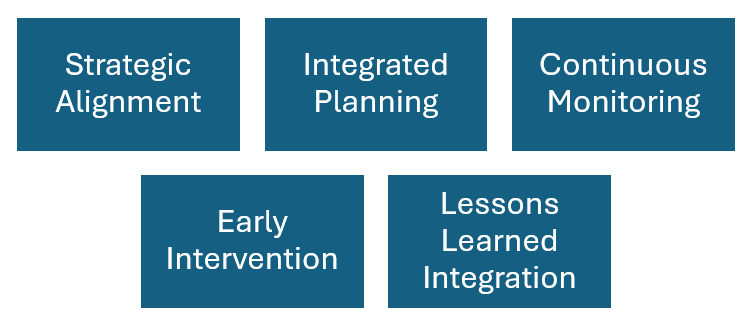
- Phase 1: Strategic Alignment
When launching a project, it is essential that all parties agree on the commercial objectives, the division of risks, the governance mechanisms, and the ways in which they will communicate. Getting everybody on the same page early in the process is one of the main factors leading to a smooth collaboration throughout the project, and laying the groundwork effectively is key. Construction dispute avoidance in the first place is only possible by taking into account the procurement aspects at the very planning stage.
- Phase 2: Integrated Planning
A highly collaborative planning session should be the platform through which owners, consultants, contractors, and suppliers together design timelines, purchasing tactics and risk control measures. The greater the level of cross-functional collaboration, the less fragmented the project delivery will be and the more predictable the outcome will become.
- Phase 3: Continuous Monitoring
The use of live performance measuring tools will support stakeholders to mark out developing problems swiftly. Also, frequent leadership meetings together with risk sessions serve as a solid tool by which continuous alignment throughout the project implementation can be ensured. Companies equipped with advanced monitoring technologies are generally less confronted with the problems involved in construction claims handling.
- Phase 4: Early Intervention
The main reason why disputes become viral is that both parties refuse to listen to each other and only make their arguments louder. The formalised means of escalation are simply mechanisms that open the door for early-stage intervention and joint problem resolution before the conflict reaches a boiling point.
- Phase 5: Lessons Learned Integration
By compiling and reviewing the lessons learned through a project, an organisation not only gains an understanding of the breakdowns in communication and the shortcomings occurring in governance, but also the effective practices of collaboration that may be put to use in the future. Through the notion of continuous learning, an organisation’s ability to construction dispute avoidance may be greatly enhanced.
Key Indicators of Strong Collaboration in Construction Projects
Organisations can evaluate collaboration maturity by measuring project indicators that are quantifiable. Such metrics reveal if the alignment of stakeholders is increasing or decreasing throughout the project execution phase.
- Fewer arguments over change orders.
- Reduction in the time required to get approvals.
- Better adherence to the planned schedule.
- Decreased costs related to court and arbitration.
- Superior stakeholder satisfaction ratings.
- More openness in the sharing of information.
- Accelerated communication of problems and their solutions.
- Higher labour efficiency.
Projects with these attributes tend to be more resistant, commercially steady, and effectively run. Besides, excellent collaboration results in improved conditions for innovation and long-term relationships with stakeholders.
The Future of Construction Dispute Avoidance
The construction sector in the coming years will focus more on integrated delivery systems, digital collaboration, and proactive governance models. Since infrastructure investments are rapidly growing worldwide, the complexity of projects will also escalate substantially. Those entities that resist updating their collaborative work methods might face higher numbers of disputes, increased project expenses, and deterioration of their client relationships.
On one hand, the use of technologies, among others, such as digital twins, AI-based risk prediction, and blockchain contract systems, will go deeper, moulding the coordination of project activities between different stakeholders. On the other hand, to support more collaborative commercial structures, various procurement standards are being revised by institutions like PMI and RICS for both public and private sector projects. Hence, construction dispute avoidance will effectively turn into a strategic differentiator rather than just a legal risk management exercise.
Organisations making an effort in leadership that is based on collaboration, establishing governance that is well integrated, and setting up communication systems that are transparent are expected to outstrip competitors not only in project delivery but also in market reputation. Most significantly, such companies will be fostering powerful ecosystems that are capable of handling more complex projects with increased certainty and fewer conflicts.
Final Words
There is a shift from adversarial methods of working within the construction industry toward a collaborative approach. This change includes more open communication and working together to solve problems. Research indicates that when all parties align their goals early on and work together to create a governance model for the project, the likelihood of having disputes during the project is greatly reduced. It is now not just the legal teams or contract administrators that can help with construction dispute avoidance, but all members of an organisation, including owners, consultants, contractors, and suppliers, must have a commitment to working together.
By creating a collaborative procurement model, leveraging digital technologies, aligning all levels of leadership, and developing structured communication systems, project stakeholders will capitalise on a decrease in claims and an increase in delivery certainty and operational performance. The organisations that prioritise collaboration in this increasingly complex environment will be able to better safeguard their profitability, maintain strong client relationships, and deliver successful projects over time.
Sources
- https://www.pmi.org/learning/library/avoiding-contract-disputes-construction-projects-3705
- https://www.designingbuildings.co.uk/wiki/Dispute%20avoidance
- https://www.autodesk.com/blogs/construction/construction-disputes/
- https://www.researchgate.net/publication/397905847_Strategies_to_Avoid_Conflicts_in_Construction_Contracts_A_Structured_Approach_for_Modern_Projects
- https://www.fenwickelliott.com/sites/default/files/2024_04_25_dispute_avoidance_and_cap_website.pdf

