

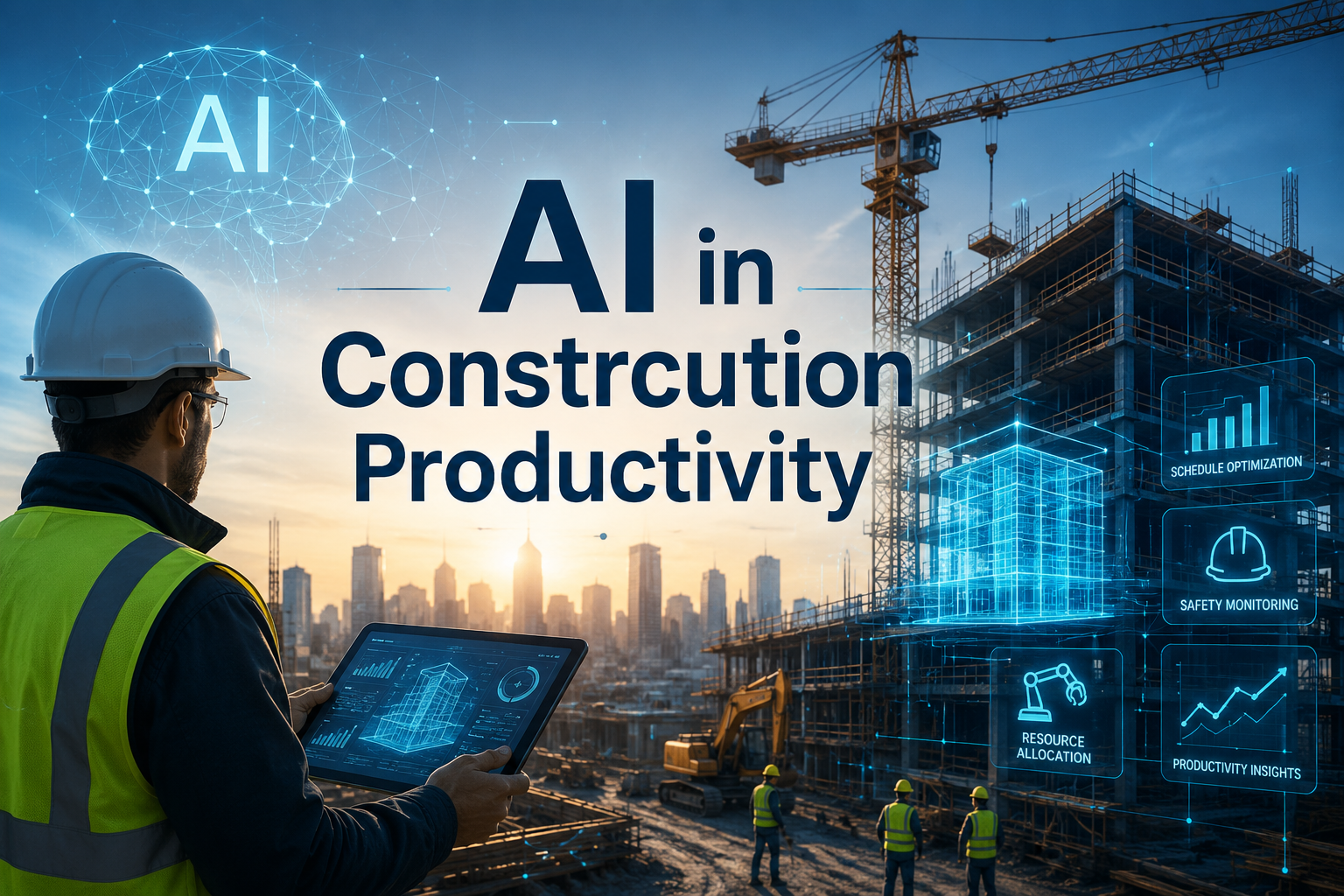
AI in construction productivity is no longer the pipe dream of a far-off future but a necessary mandate for a sector beleaguered by historically flat productivity. The construction of the global built environment has, for decades, failed to keep pace with efficiency improvements achieved within manufacturing, and the result has led many to question if there truly is a cure-all technological solution. While it’s easy to embrace transformative software, the reality is that many complex and fragmented workflows limit even the technology designed to improve them.
To experience significant gains with AI in construction productivity requires careful attention to both algorithmic capabilities and the required organisational change. It’s within the interaction of the data-driven and the physically grounded that we can differentiate where the machine ends and the human workflow begins. The effective application of AI in construction productivity hinges on the harmonious marriage of two previously immiscible forces and will yield a durable, high-performance delivery system.
The Persistent Paradox of Construction Efficiency
As highlighted in recent industry reports by both McKinsey and Autodesk, compared to other industries which have doubled output, the construction environment is still relying on legacy ways of doing things. In comparison with other industries, this appears to suggest that technology alone was never the answer for the AI productivity gap in construction over the last 30 years. Generally, all we’re experiencing is high-tech tools on top of low-tech methods, otherwise described as ‘digitised chaos’.
The solution lies in a move towards industrialised construction and more integrated delivery methods. If you don’t fix the siloed data which characterizes modern contracting, you can never truly access the benefits of AI in construction productivity. Leaders now need to determine if it’s the technology or the culture which is changing to achieve this within their project life-cycle.
Five Pillars Where Intelligence Meets Infrastructure
To understand how to move the needle, we must examine the specific technical domains where AI in construction productivity is currently making the most significant impact.
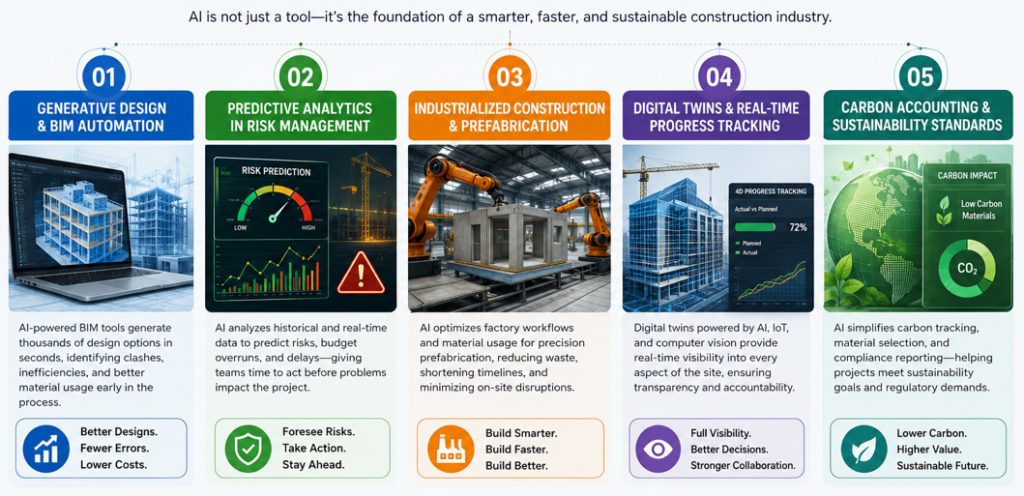
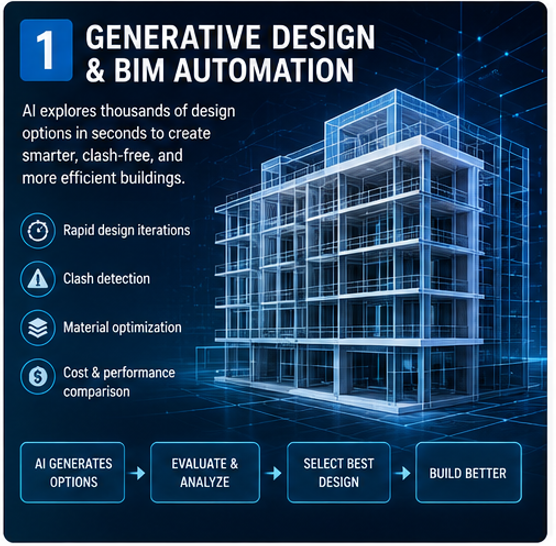
1. Generative Design and BIM Automation
2. Predictive Analytics in Risk Management

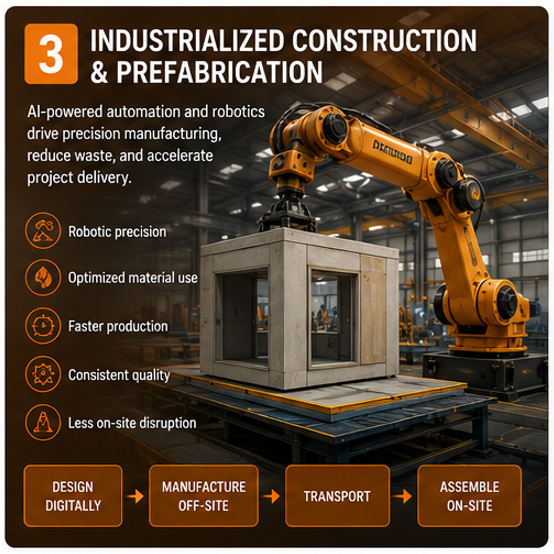
3. Industrialized Construction and Prefabrication
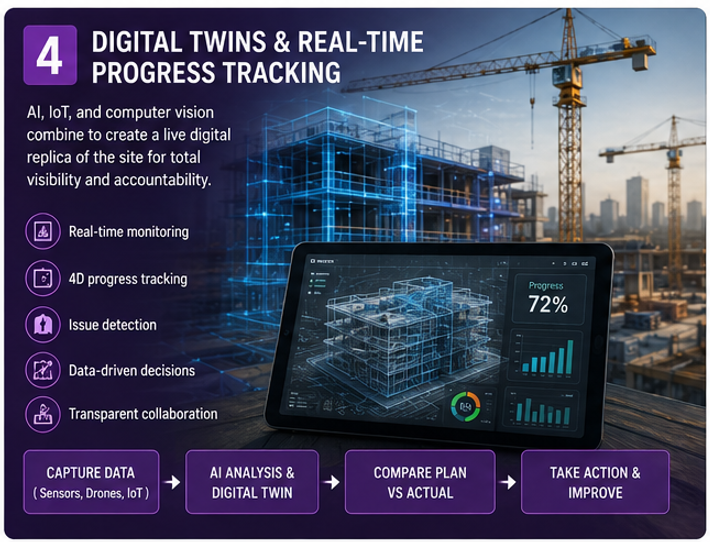
4. Digital Twins and Real-Time Progress Tracking
5. Carbon Accounting and Sustainability Standards

Technology Impact Matrix
| Technology Layer | Productivity Impact | Implementation Complexity |
| BIM Automation | High | Moderate |
| Predictive Analytics | Very High | High |
| Digital Twins | High | High |
| Generative Design | Moderate | Low-Moderate |
Industrialized Construction and Structural Inefficiencies
A well-known perspective within the productivity arena comes from industrialized construction methods. Industrialized construction models prioritise prefabrication, standardization and modularization. AI in industrialized construction still plays an assistant, rather than a lead. The role of process and the value of repeatable, standardized workflows becomes far more apparent when examining AI and its effect on productivity in construction, even the most highly “industrialized” construction can run into the issue of AI models struggling to produce consistent output if processes are not standardized in the first place.
Some valuable observations related to industrialized construction and the ability to improve the construction project outcome:
- Lack of data standardization inhibits AI application.
- Supply chain fragmentation prevents process optimization opportunities.
- On-site variability negates predicted value.
- Unreliable on-site coordination translates directly to rework and lost value.
- Workflows must be structured for digital tool value
Where Productivity Breaks Down
Below is a simplified breakdown of common productivity loss areas in construction:
📊 Productivity Loss Distribution
Rework & Errors ██████████████ 30%
Poor Coordination ████████████ 25%
Delays & Scheduling █████████ 20%
Material Waste ███████ 15%
Admin Overhead █████ 10%
This visualization shows that most inefficiencies are process-driven rather than technology-driven, reinforcing the debate around whether AI can improve construction productivity.
AI vs Process Problems: A Comparative View
| Factor | AI Contribution | Process Issue Impact |
| Scheduling | High | High |
| Cost Control | Medium | High |
| Design Efficiency | High | Medium |
| Rework Reduction | Medium | Very High |
| Productivity Growth | Medium | Very High |
The Process Problem: Why Technology Alone Fails
We must understand that despite the promises of improved AI in construction productivity, this technology is deployed on a flawed ecosystem. The system in the construction projects involves fragmented contracting in which risk is passed down the line. Without this coordination, no preconstruction technology, even the most advanced, can overcome a situation in which there is no trust among the involved parties. To see gains on AI in construction productivity, the industry needs to adopt lean principles, emphasising flow rather than local optimisation.
Conclusion: Harmonizing Code and Concrete
The response to whether AI is the cure to productivity challenges is a qualified yes, but only in conjunction with extreme process reengineering. The journey toward AI in construction productivity is a marathon and not a sprint. It demands both proper running shoes and proper training. Come 2030, the firms that do the best will be those who treat data as their most critical physical asset. By creating an atmosphere that sees AI in construction productivity as a partner rather than a replacement for human intelligence, we may be finally able to escape from the cycle of static growth. Construction’s future is both intelligent and interconnected.
Sources
- https://www.oracle.com/construction-engineering/ai-construction/
- https://www.autodesk.com/blogs/construction/ai-construction/
- https://www.sciencedirect.com/science/article/pii/S2352710221011578
- https://www.mckinsey.com/uk/our-insights/the-mckinsey-uk-blog/how-the-construction-industry-can-boost-productivity-through-technology
- https://www.laingorourke.com/thinking/how-ai-can-transform-construction/

