

In school and life, success isn’t just about talent — it’s about how you think. One of the most important ideas students can understand is the difference between a growth mindset and a fixed mindset. These two ways of thinking shape how we learn, how we handle failure, and ultimately, how far we go. Let’s break it down.
🧠 What Is a Mindset?
A mindset is your set of beliefs about your abilities and intelligence. It influences how you see challenges, how you deal with mistakes, and how much effort you’re willing to put in.
💡 Carol Dweck, a psychologist at Stanford University, introduced two key types of mindset:
- Fixed Mindset
- Growth Mindset
🚫 What Is a Fixed Mindset?
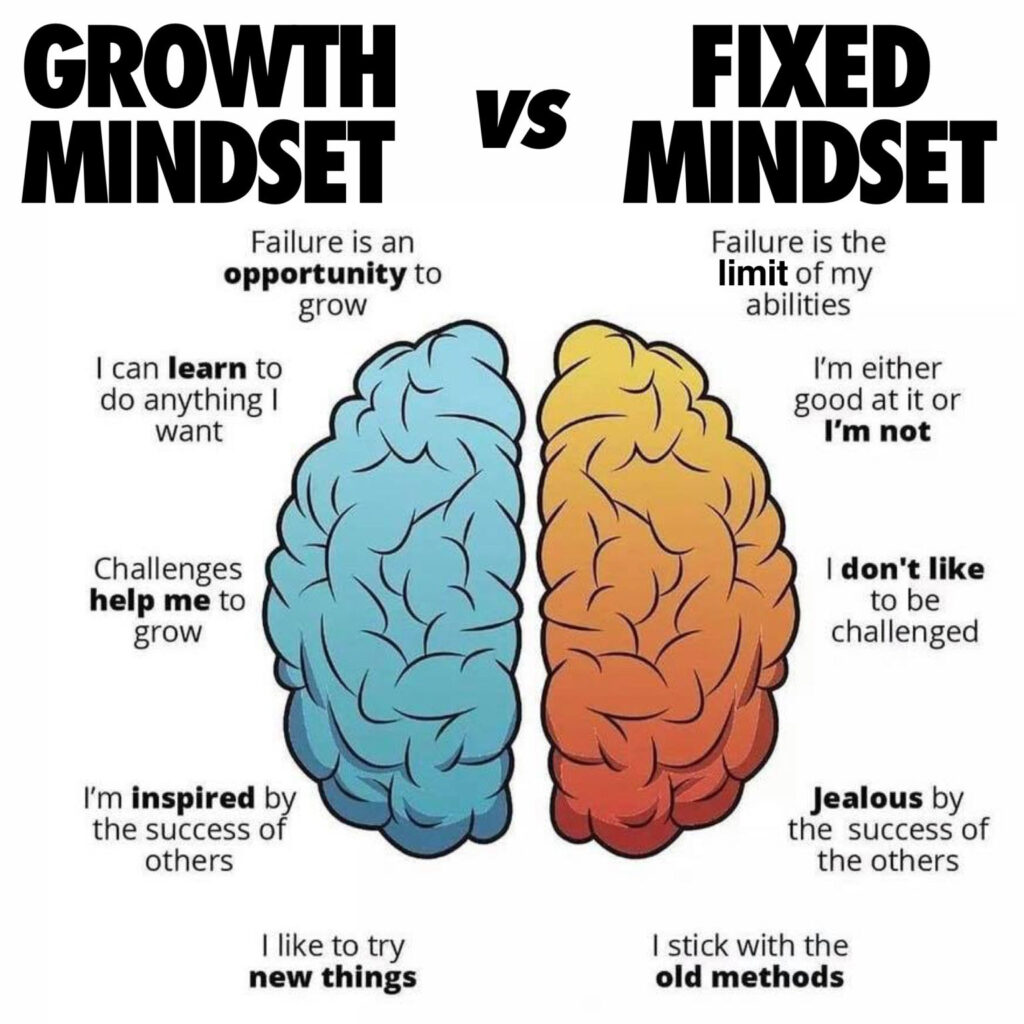
People with a fixed mindset believe:
- Intelligence is something you’re born with.
- You’re either good at something, or you’re not.
- Effort doesn’t matter much — talent does.
- Failing means you’re not smart.
Example:
If a student fails a math test, they might say, “I’m just bad at math,” and give up trying.
✅ What Is a Growth Mindset?
People with a growth mindset believe:
- Intelligence and skills can be developed.
- The brain is like a muscle — it gets stronger with use.
- Mistakes are part of learning.
- Effort and persistence lead to success.
Example:
If a student fails a math test, they might say, “I need to study differently next time,” and look for ways to improve.
🔍 Why It Matters for Students
The way students think about learning affects their:
- Confidence
- Motivation
- Performance in school
- Willingness to take on new challenges
Students with a growth mindset are more resilient, more curious, and less afraid of failure.
📊 Real-Life Benefits of a Growth Mindset
- Improved grades and academic performance
- Greater willingness to seek help and try new strategies
- Increased resilience and stress management
- Higher self-esteem and confidence
- Long-term success in both school and life
🛠️ How to Develop a Growth Mindset
- Change Your Self-Talk
- Say “I can’t do this yet” instead of “I can’t do this.”
- Celebrate Effort, Not Just Results
- Focus on the process, not just the grade.
- See Failure as Feedback
- Every mistake is a step toward improvement.
- Ask for Help & Learn from Others
- Learning from others is a strength, not a weakness.
- Be Curious
- Stay open to new ideas and challenges.
| Scenario | Fixed Mindset Response | Growth Mindset Response |
| You fail a test | “I’m not smart.” | “What can I do differently next time?” |
| You struggle with a subject | “I’m just not good at this.” | “I can get better with practice.” |
| Someone else succeeds | “They’re just lucky.” | “I can learn from them.” |
🎓 Final Thoughts
Developing a growth mindset can transform the way you learn, study, and live. It empowers you to take control of your education and future — not by being perfect, but by never giving up on learning.
💬 Remember: It’s not about how smart you are — it’s about how smart you can become.

