

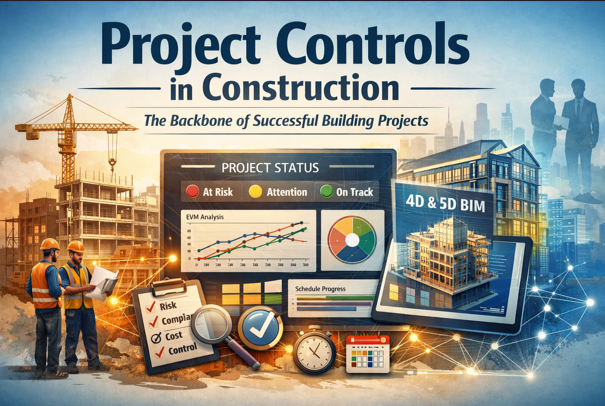
Project controls in construction are literally the nervous system of the project. They silently ensure the smooth flow of information, without which we can’t achieve the objectives. While project management is about the overall leadership of people and processes, this particular function goes into the data-driven reality of budget and schedule commitments. Even the most creative designs can suffer from huge cost overruns and time delays if there is no good way of monitoring performance.
By combining advanced data analytics with conventional site management, it is possible to figure out the risks even when they are just thoughts on paper and not actual physical problems yet. Such a proactive approach can completely change the perception of a construction site, which normally is a place of emergency, to a place where things are running smoothly and the outcomes are predictable.
Importance of Project Controls in Construction
Today, constructing a building involves so many facets that supervising it merely with spreadsheets and common sense is not enough. Having project controls in construction helps the parties to keep a ‘single source of truth’ that connects the field and the home office. Such synchronisation is very important because it guarantees that all the money spent and work hours are directly aligned to the set milestones.
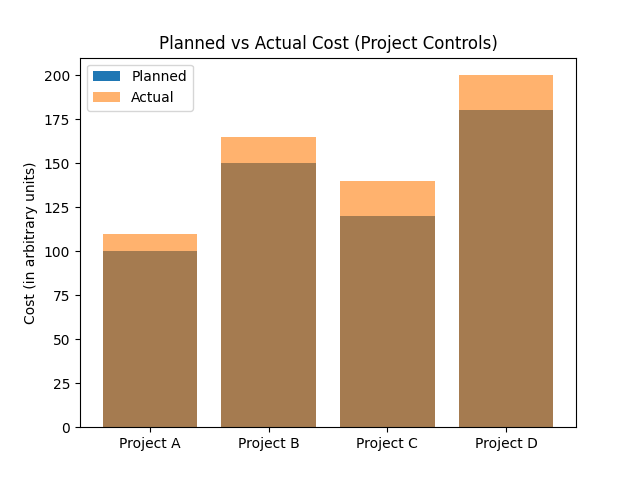
Top-notch companies rely heavily on these systems to reduce the risks due to the instability of the prices of materials and labour shortages that currently challenge the industry. In the end, how well-developed a company’s project controls in construction system is, in most cases, a major factor separating a money-making project from a legal battle.
Core Pillars of Effective Project Management and Oversight
Understanding how challenging projects manage to keep on schedule requires one to analyse the exact tools through which work visibility is delivered. Project controls in construction depend on an ordered set of processes, which are responsible for capturing, analysing, and reporting on different aspects of the building lifecycle.
1. Integrated Project Planning
Starting and finishing a project with a quality roadmap that incorporates all dependencies and constraints is essential to the project’s success. Integrated planning verifies that the order of activities is sensible and that resources are distributed in the most effective way for the entire time of the build.
By employing Critical Path Method (CPM) scheduling, teams are able to see how a single delay affects the finishing date of the project. It is at this point that the baseline is set, which serves as a reference for measuring all future performance.
2. Rigorous Cost Control and Budgeting
Keeping your site financially healthy involves much more than simply monitoring invoices. One has to perform an in-depth analysis of unit costs and commitment tracking. Project controls in construction allow for a persistent comparison of actual expenses with the budget so that profit margins are not diminished by scope creep.
Cost engineers, when they detect discrepancies promptly, can change the procurement or labour factors to align the project financially once again. This rigorous work keeps the project attractive to investors and other stakeholders over even a multi-year period.
3. Real-Time Progress Tracking
Knowing the exact amount of work done in comparison with the plan is the only reliable way to measure productivity. Field data capture systems enable the reporting by site supervisors of work progress made each day. This data is subsequently summarised for preparing high-level earned value management reports.
Such minute scrutiny enables the pinpointing of particular trades or locations lagging behind. Managers can then take immediate steps to correct the situation. In the absence of such information, the management team, in effect, is navigating blindly by relying on hearsay instead of hard facts.
4. Advanced Forecasting and Trend Analysis
One of the greatest advantages that project controls in construction can grant a leadership team is the ability to foresee the future. Controllers, through the analysis of performance trends, can forecast the budget outcome even several months ahead by calculating the “Estimate at Completion” (EAC) measure.
This kind of forward-looking perspective allows for making informed decisions strategically. For instance, it may be possible to negotiate with subcontractors early on or consider changing the construction sequence again. Predictive analytics completely removes uncertainty from project delivery and makes it possible to rely on facts instead of wishes.
5. Delay Monitoring and Claims Mitigation
Maintaining a completely reliable record of project events is a must for success, especially in an industry where litigation happens very frequently. Tracking delays requires, first and foremost, keeping a record of each “force majeure” incident, change order, or site obstruction that has an impact on the project schedule’s critical path.
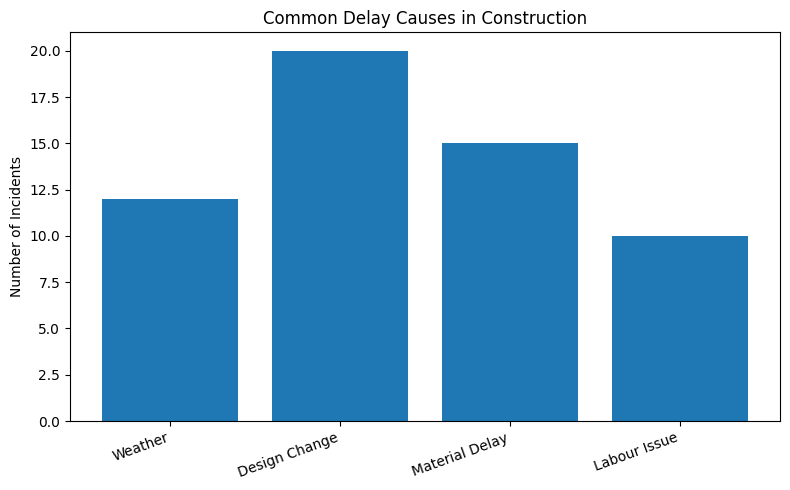
This record can be used as a defence during procurement disputes or when requesting time extensions from the client or owner. Thorough documentation not only protects the company’s interests but also ensures that claims will be resolved based on data rather than feelings.
Leveraging Technology through Dashboards and BIM
The progression of digital tools has dramatically changed our ways of visualising complicated datasets in the current scenario of building construction. Project controls in construction context have transitioned to interactive dashboards. Such dashboards combine data from many sources into a single, pretty, user-friendly interface. Through these platforms, executives are able to get an instant visual depiction of a project’s condition. They use RAG (Red-Amber-Green) statuses to signal project health aspects and areas that require attention.
- BIM Integration: Combining 3D models with schedule and cost information (4D and 5D BIM) results in a graphic representation of a project’s evolving status.
- Mobile Data Entry: Field tablet usage guarantees that the data is being updated and accurately represents the site conditions.
- Automated Reporting: Eliminating the manual compiling of reports enables project controllers to allocate more time for analysis and less for data entry.
Enhancing Profitability through Data-Driven Decisions
Maximising the return on investment means firms should operate data as one of the highest-value assets that guide each stage of the build. Project controls in construction at a deep level provide a structure for ‘Preconstruction’ planning – a trend that industry leaders like Autodesk have recognised.
This phase is all about figuring out the risks before the actual work starts, and it relies on using past data to improve costs and schedules. Once the execution phase is underway, the foundation prepared during preconstruction helps the team be ready for the usual problems.
Frequent checking of Key Performance Indicators (KPIs) offers a level of responsiveness that was not even thought of in the heavy civil or commercial sectors. Since project controls in construction continuously monitor labour productivity, managers can identify the onset of worker fatigue or a decrease in efficiency prior to such leading to either safety accidents or rework.
This all-encompassing perception of the project scene promotes a culture of responsibility where each team member is aware of how their actions influence the final result. Besides, it enhances interactions with clients as clear reports foster trust and support the need for budget or schedule changes.
Navigating the Challenges of Modern Project Delivery
Introducing these systems in an organisation, despite their obvious advantages, needs a major change in the organisation’s culture and a full commitment to the quality of data. Project controls in construction can be effective only if the data that field workers enter into the system is of high quality.
When daily reports are inaccurate or when change orders are not entered after the fact, the analysis that comes out of these logs will be both incorrect and misleading. Hence, along with software platforms, training and standardised procedures are extremely important to manage the data effectively.
- Standardisation: Creating a consistent Work Breakdown Structure (WBS) for all projects facilitates improved benchmarking and analysis across projects.
- Interdisciplinary Collaboration: Making sure that scheduling, cost, and procurement departments are in communication with each other eliminates the problem of data silos.
- Continuous Improvement: Conducting project “post-mortems” enables the organisation to draw lessons from its errors and improve its project control methods.
Conclusion
The industry’s landscape is moving toward a model in which having excellent project controls in construction is not something that can be chosen but is actually the very minimum requirement for survival. As profit margins are decreasing and timeframes are getting stricter, the skill to forecast and manage results will be the most significant means of gaining an edge over competitors.
Construction companies, through their investments in the right personnel, methods, and technology, can not only make sure that their projects are carried through but also that they are done well. The silent role of project controls in construction will remain the support, the backbone, of the most amazing and profitable building projects in the world.
Sources
- https://www.oracle.com/construction-engineering/
- https://logikalprojects.com/insights/the-basics-of-project-controls/
- https://resources.kahua.com/blog/a-comprehensive-guide-to-construction-project-controls
- https://www.asce.org/education-and-events/explore-education/on-demand-courses/construction-project-controls
- https://smartpm.com/blog/the-ultimate-guide-to-construction-project-controls

