

Description

Emotional intelligence in the workplace is often underestimated but plays a critical role in organizational success. Beyond strategies and metrics, a company’s essence lies in its people, including their emotions, interactions, and connections. Emotional intelligence for employees is a teachable skill that bridges the gap between professional tasks and team harmony.
This article covers the key components of emotional intelligence, its importance at work, practical applications, and how leaders can cultivate an emotionally intelligent workforce.
Short on time? Here are the key takeaways:
Emotional intelligence is a teachable skill that strengthens communication, collaboration, and workplace culture.
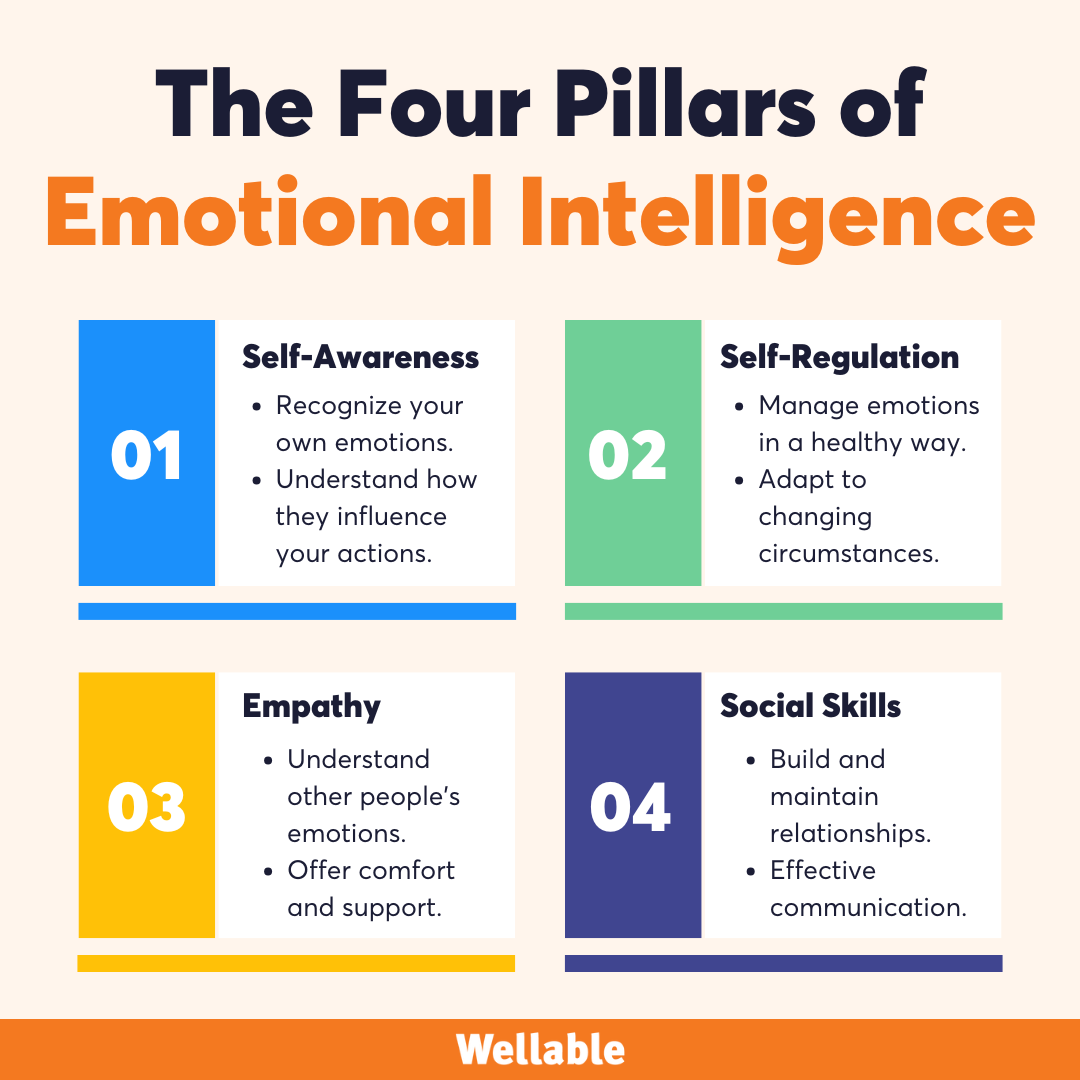
There are four key components of emotional intelligence, including self-awareness, self-regulation, empathy, and social skills.
High emotional intelligence improves teamwork, conflict resolution, resilience, and employee well-being.
What Is Emotional Intelligence?
Emotional intelligence is the ability to recognize, understand, and manage emotions effectively. It involves being attuned to how feelings influence thoughts and actions, as well as perceiving and interpreting others’ emotions. Although it’s impossible to control how other people feel or behave, understanding the emotions driving their behavior leads to more effective interactions. High emotional intelligence is often linked with strong interpersonal skills, particularly in areas like conflict resolution and communication.
Four Main Components of Emotional Intelligence
Emotional intelligence in the workplace encompasses four key components: self-awareness, self-regulation, empathy, and social skills.
Why Emotional Intelligence at Work Is Important
- Strengthens collaboration by helping teams connect, communicate, and work together more effectively
- Supports conflict resolution by enhancing empathy and understanding of diverse perspectives, paving the way for more productive outcomes
- Builds resilience by helping people adapt to organizational change and manage stress while maintaining composure and focus
- Empowers leaders to understand what motivates and inspires their team members to perform their best.

- Enhances well-being and positivity, reducing the chance of burnout and improving employee satisfaction
- Empowers individuals to voice diverse perspectives, minimizing the pitfalls of groupthink and encouraging a more inclusive, innovative environment
- Nurtures growth by enhancing confidence and openness to learning new things.

