

Description

6 Days (Instructor-Led)
36 Hours (Self-Paced)
Course authored by:

David Holzer
Acquire practical data science and machine learning skills to build custom AI-driven security solutions that transform your organization’s threat detection capabilities.
“The course content’s design is superb in my opinion. It begins by covering the fundamentals of data extraction from diverse sources using Python, followed by a dive into the basics of statistics. From there, it delves into ML models and DNNs. I appreciate the thoughtfulness behind this progression.”
Viswanath Chirravuri Thales
Course Overview
Harness practical data science and machine learning in cybersecurity. This course transforms complex AI concepts into accessible tools through hands-on labs comprising over 70% of class time. Designed specifically to focus on machine learning in cybersecurity, the course prepares students to apply AI techniques to real-world security problems—making it a powerful option for those pursuing the GMLE certification (GIAC Machine Learning Engineer for Cybersecurity).
Participants solve actual security challenges using statistical models, probabilistic tools, and neural networks rather than engaging in theoretical discussions. You will develop skills to extract, analyze, and visualize security data, construct predictive models for threat detection, and implement anomaly detection systems.
The curriculum achieves an optimal balance between essential theory and practical application, requiring only intermediate Python skills and basic mathematics knowledge. Security professionals gain immediately applicable techniques for enhancing security operations, incident response, and threat hunting through targeted AI implementation.
Data Science, Artificial Intelligence, and Machine Learning aren’t just the current buzzwords, they are fast becoming one of the primary tools in our information security arsenal. The problem is that, unless you have a degree in mathematics or data science, you’re likely at the mercy of the vendors. This course completely demystifies machine learning and data science. More than 70% of the time in class is spent solving machine learning and data science problems hands-on rather than just talking about them. You will leave the class not only understanding how these tools and techniques work, but understanding how to think about your data, making it into something that you can apply machine learning and AI techniques to.
Unlike other courses in this space, this course is squarely centered on solving information security problems – in other words, applied rather than theoretical. Where other courses tend to be at the extremes, teaching almost all theory or solving trivial problems that don’t translate into the real world, this course strikes a balance. While this course will cover necessary mathematics, we cover only the theory and fundamentals you absolutely must know, and only so as to allow you to understand and apply the machine learning tools and techniques effectively. We show you how the math works but don’t expect you to do it. The course progressively introduces and applies various statistic, probabilistic, or mathematic tools (in their applied form), allowing you to leave with the ability to use those tools and to be able to troubleshoot your results since you have developed strong intuitions about the underlying mathematics. The hands-on projects covered were selected to provide you a broad base from which to build your own machine learning solutions. If you want or need to know how AI tools like ChatGPT really work so that you can intelligently discuss their potential uses in your organization, in addition to knowing how to build effective solutions to solve real cybersecurity problems using machine learning and AI today, this is the class you need to take. Check out the extensive course description below for a detailed run down of course content and don’t miss the free demo available by clicking the “Course Demo” button above!

Course Syllabus
Explore the course syllabus below to view the full range of topics covered in SEC595: Applied Data Science and AI/Machine Learning for Cybersecurity Professionals.
Major Topics Covered Include
- Data acquisition from SQL, NoSQL document stores, web scraping, and other common sources
- Data exploration and visualization
- Descriptive statistics
- Inferential statistics and probability
- Bayesian inference
- Unsupervised learning and clustering
- Deep learning neural networks
- Autoencoders
- Anomaly detection with neural networks
- Loss functions
- Convolutional networks
- Embedding layers
- Practical containerized deployment
Syllabus Summary
- Section 1: Data Acquisition, Cleaning, and Manipulation
- Section 2: Data Exploration and Statistics
- Section 3: Essentials of Machine Learning: Trees, Forests, & K-Means
- Section 4: Essentials of Machine Learning: Deep Learning
- Section 5: Essentials of Machine Learning: Autoencoders
- Section 6: Essentials of Machine Learning: Functional Models and Deployment
What You’ll Learn
- Design custom machine learning solutions for security data
- Implement AI-based anomaly detection and threat hunting
- Build neural networks for security classification tasks
- Create effective data visualizations for security insights
- Develop Python automation for security data analysis
Business Takeaways
- Reduce alert fatigue and false positives in security operations
- Enhance threat detection with predictive AI capabilities
- Automate routine security tasks through machine learning
- Identify previously undetectable security anomalies
- Optimize security resource allocation with data insights
- Improve incident response time through intelligent analysis
- Strengthen security posture with proactive AI detection
Author Statement
“AI and Machine Learning are everywhere. How do the vendor solutions work? Is this really black magic? I wrote this course to fill an enormous knowledge gap in our field. I believe that if you are going to use a tool, you should understand how that tool works. If you don’t, you don’t really know what the results mean or why you are getting them. This course provides you with a crash course in statistics, mathematics, Python, and machine learning, taking you from zero to…I’m reluctant to promise ‘Hero…’ Let’s say competent-person-who-can-solve-real-problems-today!”

Data Acquisition, Cleaning, and Manipulation
This section introduces some of the terminology in the data science and machine learning fields, in addition to introducing a number of the technologies that are used as data sources. Since the first step in any data science or machine learning project is to acquire data, the balance of the day is focused on hands-on exercises to prepare the student for these tasks.
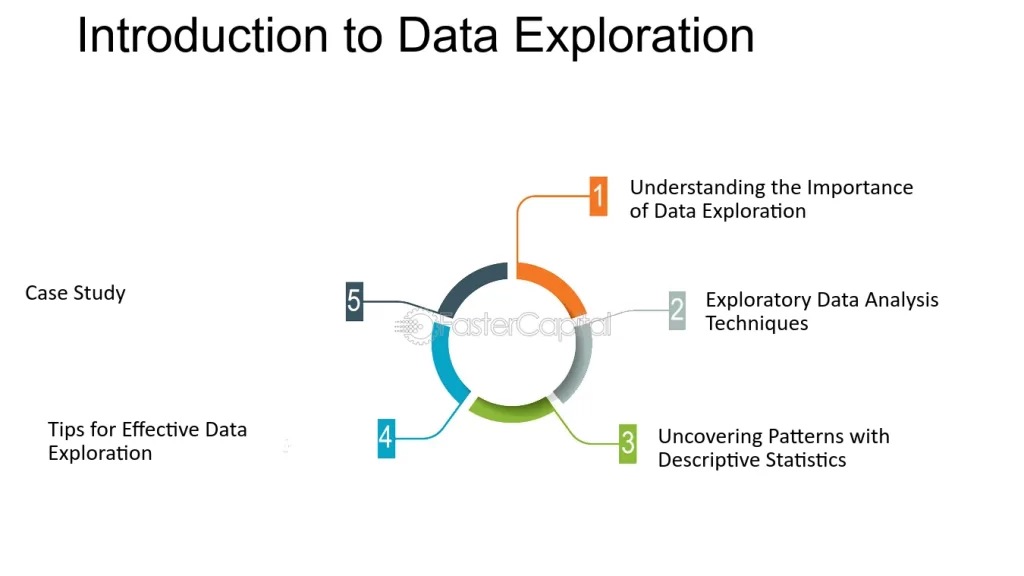
Data Exploration and Statistics
The remainder of this section is translating the statistical knowledge gained into the field of signals analysis. After a discussion concerning the derivation and applications of the Fourier series, the Fast Fourier Transformation, and the Discrete Fourier Transformation, students use these tools in a real-world threat hunting activity.
Essentials of Machine Learning: Trees, Forests, & K-Means
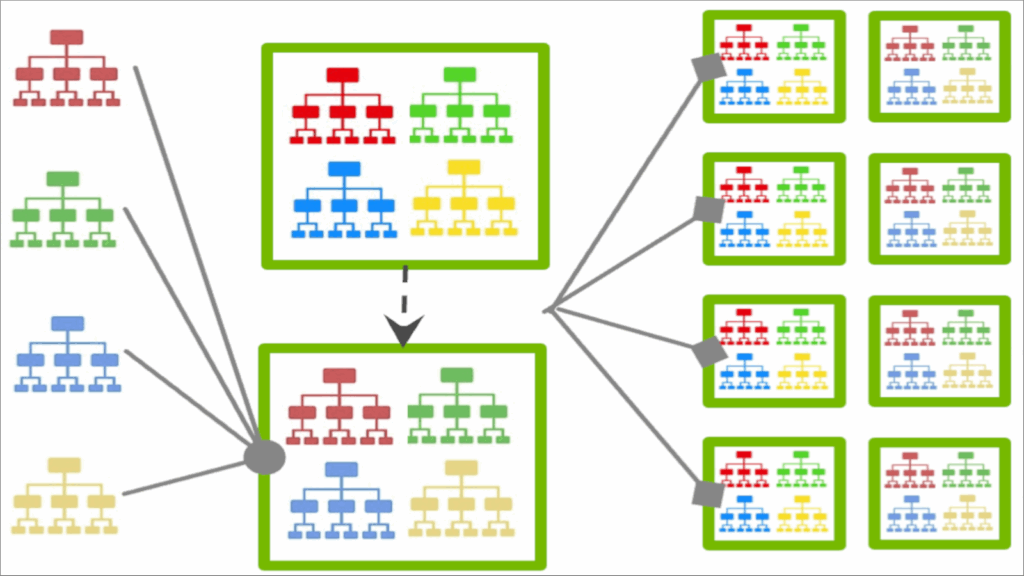
The remaining 18+ contact hours of this course are spent learning about and immediately applying various machine learning models. After each topic is introduced and discussed, students engage in lengthy hands-on labs to develop an intuitive understanding and apply the technique to real problems.

